Home care services in Singapore
Home nursing, home medical, caregiver respite, and personal-care services delivered at the senior's residence. Both AIC-subsidised and private providers.
What is it?
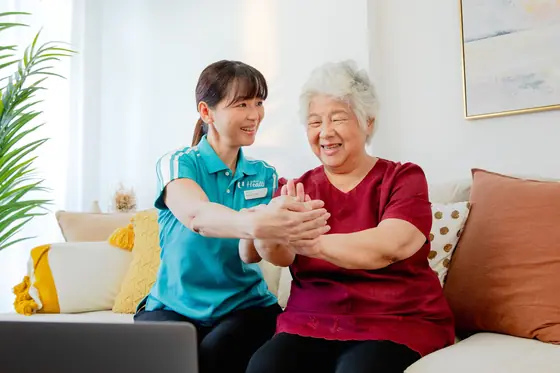
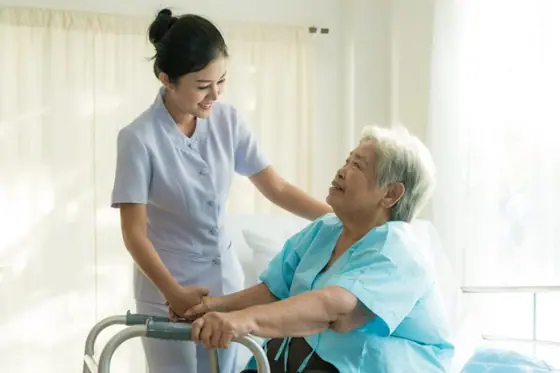
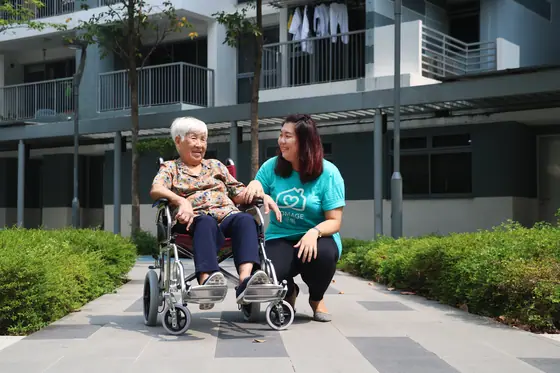
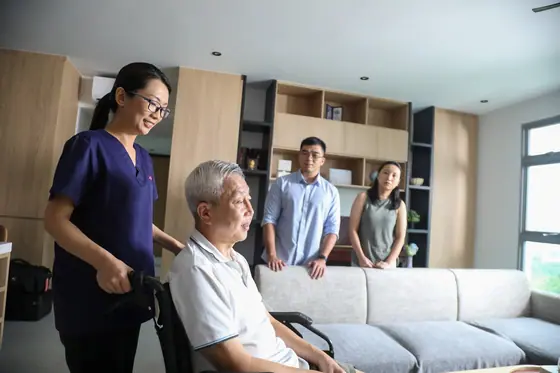
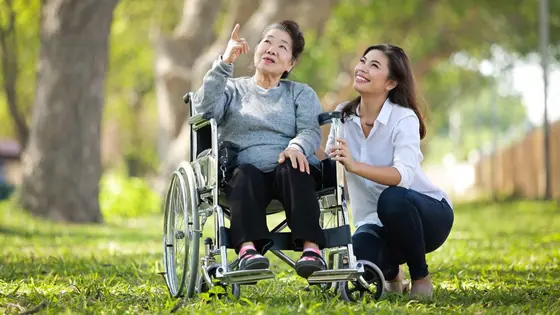
Home care covers a spectrum of in-home services: home nursing (wound care, injections, catheter care), home medical (doctor home visits), personal care (bathing, feeding, mobility help), and physiotherapy home visits. Both AIC-subsidised providers (HCPP-eligible) and private providers operate in Singapore.
Who it suits
- Seniors who want to age in place
- Recovery from hospital discharge before independence is restored
- Families with a primary caregiver needing skilled support
- Patients with stable chronic conditions
Find a facility
Central Region (34)
East Region (5)
| Facility | Planning area |
|---|---|
| LC Nursing Home | |
| Medical House Call@JOO CHIAT CLINIC | |
| NTUC Health (Chai Chee) - Nursing Home | |
| NTUC Health (Pasir Ris) - Nursing Home | |
| Serene Nursing Home |
North Region (6)
| Facility | Planning area |
|---|---|
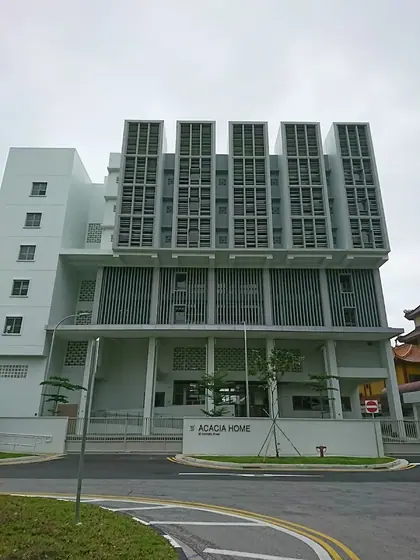
| Acacia Home | |
| Ju Eng Home | |
| MWS Christalite Methodist Home | |
| Man Fut Tong Nursing Home | |
| Singapore Christian Home | |
| Villa Francis Home |
North-East Region (9)
West Region (4)
| Facility | Planning area |
|---|---|
| All Saints Home | |
| Jaga-Me Mobile Medical & Home Care | |
| NTUC Health Nursing Home | |
| St Joseph's Home |
Costs and subsidies
Private home nursing visits in Singapore typically cost S$80–S$150 per visit, while home personal care sessions from a private provider range from S$25–S$60 per session. For patients receiving care from AIC-approved Voluntary Welfare Organisations (VWOs), out-of-pocket costs can fall significantly lower — subsidised personal care sessions can be as little as S$5–S$25 after government subsidy for lower-income households. The MOH portable subsidy via household income per person means-testing is available for eligible Singapore Citizens and Permanent Residents receiving home care from approved VWO providers; subsidy rates are tiered so that households with lower per-capita income receive higher support. See our subsidy guide for full details.
Frequently asked questions
What types of home care are available in Singapore?
Singapore home care spans home nursing (wound care, injections, catheter management by a registered nurse), home personal care (bathing, feeding, mobility assistance), home medical (doctor home visits), home palliative care, and home therapy (physiotherapy, occupational therapy, and speech therapy conducted at the patient’s residence).
Is home care subsidised for Singapore Citizens and PRs?
Yes. MOH subsidises home care delivered by AIC-approved Voluntary Welfare Organisations (VWOs). Eligibility and subsidy level are determined by household income means-testing. Singapore Citizens receive higher subsidy rates than Permanent Residents. Apply through your chosen provider or contact AIC CareLine at 1800-650-6060.
What is the difference between home nursing and a home personal care worker?
A registered home nurse is a MOH-licensed healthcare professional who can perform clinical tasks such as wound dressing, IV medication administration, nasogastric tube feeding, and catheter care. A home personal care worker assists with activities of daily living — bathing, feeding, dressing, and mobility — but cannot legally carry out clinical nursing procedures.
How do I arrange subsidised home care through AIC?
Start by contacting an AIC-approved home care provider directly, or ask a hospital medical social worker to make a referral before discharge. You can also call AIC CareLine at 1800-650-6060 (toll-free, Mon–Fri 8.30am–8.30pm, Sat 8.30am–4pm). The provider will conduct a care needs assessment and submit means-testing documents to determine your subsidy tier under the household income test.
Can home care be combined with a foreign domestic worker (FDW)?
Yes, and this is a common arrangement in Singapore. An FDW handles general daily caregiving while a home nurse or therapist visits periodically for clinical or rehabilitative needs. Families can also apply for the Home Caregiving Grant (HCG) — S$400 per month for moderate care needs or S$200 per month for lower care needs — to help offset ongoing caregiving costs.
How does home care compare to a nursing home or day care centre?
Home care lets the senior remain in their own home and is suitable when care needs are moderate or episodic. A nursing home provides 24-hour residential care for seniors with complex or high-dependency needs who can no longer be safely cared for at home. Day care centres offer structured weekday programmes and supervised care, making them a practical middle-ground option for families where the caregiver works during the day.
Does CareShield Life cover home care costs?
CareShield Life payouts can be used to offset home care expenses. Eligible claimants with severe disability (unable to perform three or more Activities of Daily Living) receive monthly cash payouts that can be directed towards any long-term care service, including home nursing and home personal care. Supplement plans from approved insurers can increase the payout amount above the basic government benefit.